


Interior Work In Dasna Ghaziabad
2025-12-24T09:25:31  read more
 read more
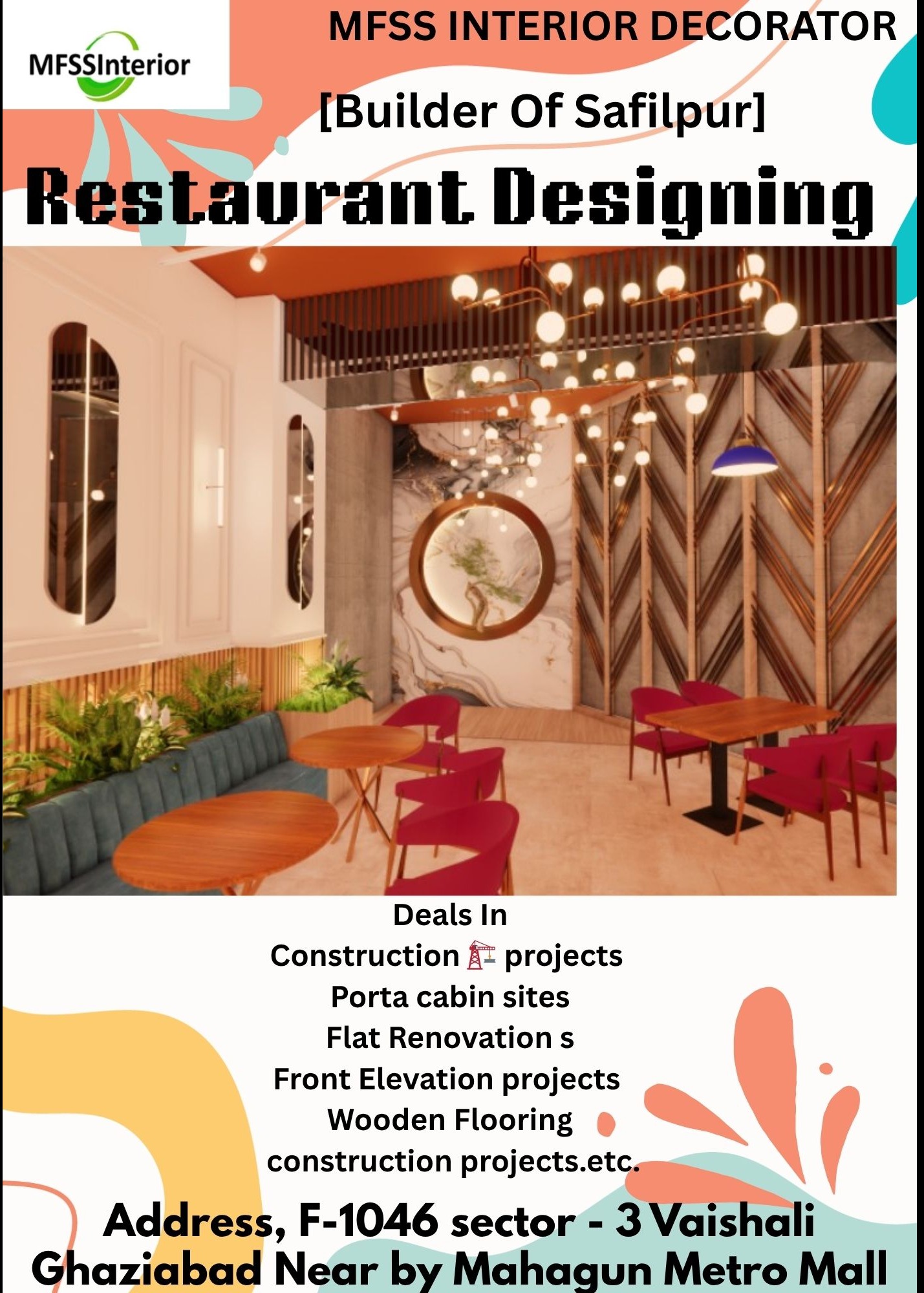

Designing a restaurant is an exciting mix of aesthetics, functionality, and customer experience. The goal is to create a space that’s visually appealing, comfortable, efficient for staff, and aligned with your brand’s identity. Here’s a structured overview to guide your restaurant design process 👇 🍽️ 1. Concept Development Before diving into layouts or colors, define the core identity of your restaurant: Type: Fine dining, café, QSR (Quick Service Restaurant), buffet, food truck, etc. Cuisine: Italian, Indian, fusion, fast food, etc. Target audience: Families, students, professionals, tourists? Theme or vibe: Rustic, industrial, modern minimalism, traditional, tropical, etc. 🎯 The concept determines everything — lighting, materials, colors, and furniture. 🧱 2. Space Planning Efficient layout = smoother operations + better customer flow. 🔹 Main Zones Entrance & Waiting Area: Create a strong first impression. Dining Area: Allocate ~60% of total space. Mix table sizes for flexibility. Kitchen: Should be near storage and service entry. Restrooms: Accessible but discreet. Service & Storage: For cleaning supplies, uniforms, dry goods, etc. 💡 Rule of thumb: Each diner needs about 15–20 sq. ft. of space. 🎨 3. Interior Design Elements Color Palette Warm tones (red, orange, yellow): Stimulate appetite. Cool tones (blue, green): Create calmness (good for cafés). Neutrals (white, beige, gray): Add sophistication. Lighting Use ambient lighting for general mood. Accent lighting on tables and artwork. Task lighting in the kitchen and service areas. Furniture & Materials Choose durable, easy-to-clean surfaces. Mix textures — wood, metal, stone, or glass — depending on theme. Ergonomic chairs and adequate table spacing for comfort. 🍷 4. Branding & Décor Logo placement, signage, menus, and uniforms should share a consistent design language. Add personal touches: artwork, plants, music, or open kitchens. Consider Instagrammable corners for social media visibility. ⚙️ 5. Technical & Regulatory Aspects Ventilation & HVAC: Crucial for kitchen areas. Fire safety: Exits, alarms, extinguishers, and clear pathways. Plumbing & electrical plans: Designed before interiors. Accessibility: Ensure ADA (or local) compliance for ramps and restrooms. 💰 6. Budget & Materials Approximate allocation: 40%: Interior & furniture 25%: Kitchen equipment 15%: HVAC, plumbing, electrical 10%: Branding & signage 10%: Contingencies Would you like me to: 🗺️ Create a layout plan (floor plan) for your restaurant, 🎨 Suggest a design theme with color palettes and materials, or 📊 Help you estimate the budget and construction cost? If you tell me the type and size of your restaurant (e.g., 1200 sq. ft. café or 80-seat fine dining), I can tailor the design plan exactly to your needs.
 read more
  read more
 We hate spam too.


