


Interior Work In Dasna Ghaziabad
2025-12-24T09:25:31  read more
 read more
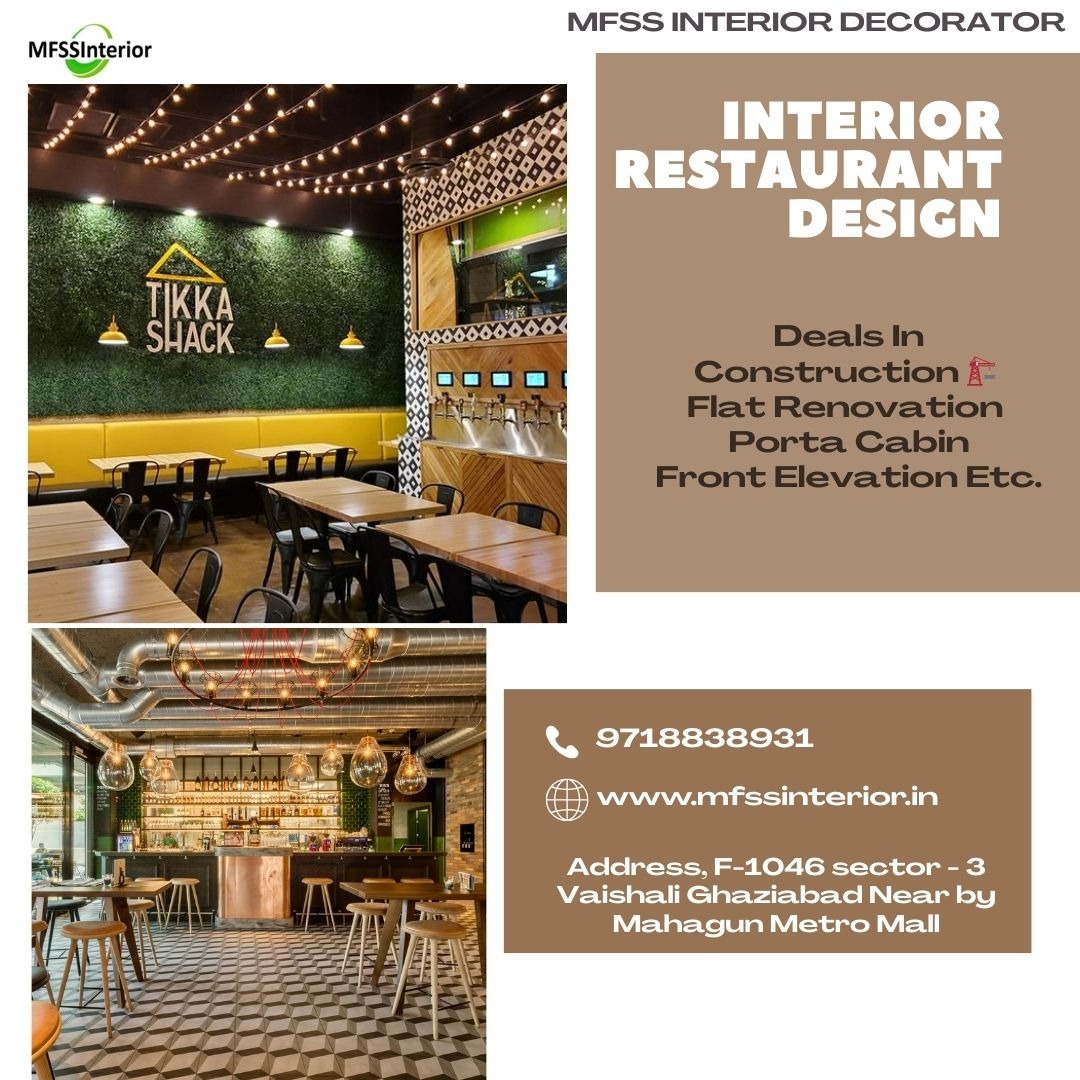

Interior design for restaurants focuses on creating an inviting atmosphere that enhances the dining experience, matches the brand identity, and encourages customers to return. It combines aesthetics, functionality, and comfort to support both the business goals and the needs of diners and staff. Key Elements of Restaurant Interior Design 1. Concept & Theme Define the restaurant's identity: casual café, fine dining, fast food, or themed (e.g., rustic, industrial, luxury). The design should reflect cuisine and brand personality (e.g., minimal & modern for a sushi bar, warm & cozy for an Italian bistro). 2. Layout & Space Planning Seating arrangements: Optimize capacity without overcrowding. Flow & accessibility: Ensure smooth movement for staff and guests. Zoning: Differentiate dining, waiting, and bar/lounge areas. Follow safety codes (exits, fire safety, accessibility for all customers). 3. Lighting Crucial for setting the mood. Warm, dim lighting for romantic or cozy settings. Bright, neutral lighting for fast food or casual spaces. Accent lighting to highlight key features like wall art or food displays. Adequate lighting for workstations (kitchen, cashier). 4. Color Palette & Materials Colors influence appetite and mood: Warm colors (red, orange, yellow) stimulate appetite. Cool colors (blue, green) promote calm and relaxation. Materials should be durable and easy to clean (wood, metal, tiles, upholstered seating). 5. Furniture Selection Comfortable seating suited to the theme (booths, chairs, communal tables). Sturdy tables and easy-to-clean surfaces. Flexible layouts (movable tables for events or large groups). 6. Acoustics & Ambience Manage noise with acoustic panels, soft furnishings, or ceiling treatments. Background music that matches the brand’s vibe (volume and style matter). 7. Decor & Branding Artwork, signage, wall graphics, and décor that reinforce the restaurant’s concept. Display of brand identity: logo placement, menu boards, unique focal points (like an open kitchen or bar). 8. Biophilic & Sustainable Design Adding indoor plants or green walls for freshness. Using eco-friendly materials and energy-efficient lighting. Trends in Modern Restaurant Design Open kitchens to showcase food preparation. Industrial style: exposed brick, pipes, metal fixtures. Minimalist designs: clean lines, neutral tones. Instagrammable spots: eye-catching walls or décor for social media sharing. Skills Needed for Restaurant Interior Designers Space planning & furniture layout expertise. Knowledge of building codes and safety standards. Ability to design for customer psychology and brand experience. Proficiency in AutoCAD, SketchUp, Revit, and 3D rendering software.
 read more
  read more
 We hate spam too.


